Spring and Summer Plant Care Guide: How to Keep Your Balcony Garden Healthy and Thriving
Learn how to care for your balcony garden during spring and summer with simple tips on transplanting, fertilizing, and watering. Discover the best plants for urban balconies in cities like New York and keep your space healthy, vibrant, and beautiful all season long.
4/30/20264 min read


As the days become longer and the weather warms up, plants naturally enter their most active and vibrant stage of growth. Spring and summer are the perfect seasons to refresh your balcony garden, give your plants the care they need, and create a green, inviting space even in the middle of a busy city like New York.
Whether you have a small balcony with a few pots or a more developed urban garden, this time of year is essential for helping your plants grow stronger, healthier, and more resilient. With a few simple practices like transplanting, fertilizing, and choosing the right plants, you can maintain a beautiful and thriving outdoor space throughout the season.
1.Why spring and summer care matters
During spring and summer, plants receive more sunlight and warmth, which naturally encourages growth. Leaves become fuller, stems strengthen, and many plants begin to flower. However, this growth also means that plants require more attention.
They need:
More frequent watering
Nutrient rich soil
Adequate space for root development
Protection from excessive heat or wind
Taking care of these aspects early in the season will make a noticeable difference in how your plants perform over the coming months.
2.Transplanting: giving your plants room to grow
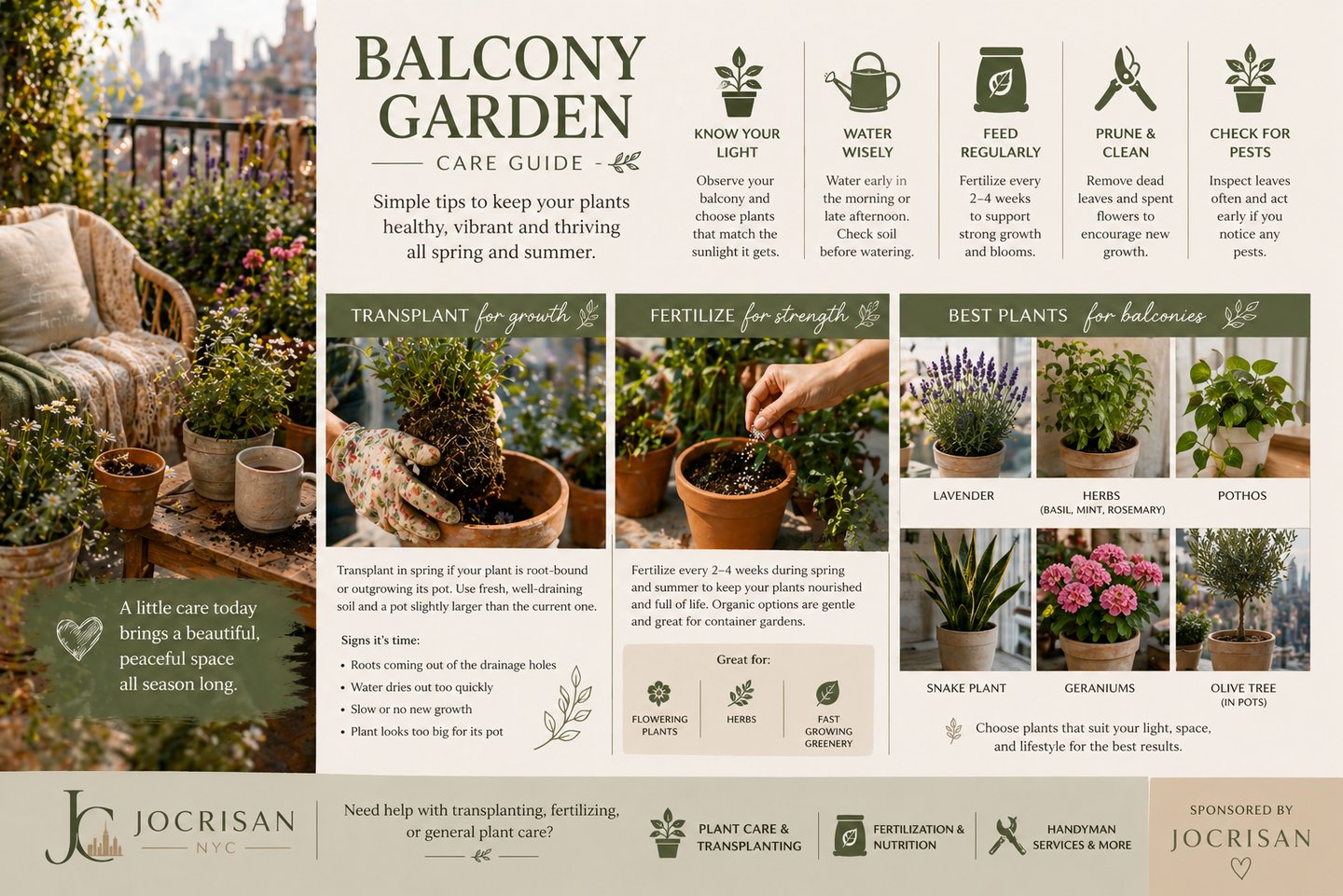
One of the most important tasks during spring is transplanting, also known as repotting. Over time, plants outgrow their containers, and their roots begin to circle tightly inside the pot. This can limit water absorption and slow down growth.
Signs that your plant needs to be transplanted include:
Roots growing out of the drainage holes
Soil drying out very quickly after watering
Stunted or slowed growth
A plant that looks too large for its container
When transplanting, choose a pot that is slightly larger than the current one. Avoid going too big, as this can lead to excess moisture retention. Use fresh, well draining soil to provide the nutrients your plant needs to continue growing.
After repotting, water the plant thoroughly and place it in a shaded area for a couple of days to help it adjust.
3.Fertilizing: supporting healthy growth
As plants grow more actively in spring and summer, they also use up nutrients in the soil more quickly. Fertilizing helps replenish these nutrients and supports stronger leaves, stems, and flowers.
A balanced liquid fertilizer or slow release granules can be applied every two to four weeks, depending on the type of plant. Always follow the recommended dosage, as over fertilizing can damage roots.
For balcony gardens, organic fertilizers are often a great option. They improve soil quality over time and are gentle on plants.
Fertilizing is especially important for:
Flowering plants
Herbs
Fast growing greenery
With consistent feeding, you will notice more vibrant colors and overall healthier plants.
4.Watering tips for warmer months
Watering becomes more frequent during spring and summer, but it is important to do it correctly.
A few key tips:
Water early in the morning or late in the afternoon to avoid evaporation
Check the soil before watering, it should feel slightly dry at the top
Ensure pots have proper drainage to prevent root rot
Adjust frequency based on sunlight and temperature
In hot urban environments like New York, balconies can heat up quickly, especially those with direct sunlight. During heatwaves, plants may need daily watering.


5. Best plants for balcony gardens in big cities
Choosing the right plants is essential for success, especially in urban environments where space and conditions can vary.
Here are some reliable options for balconies in cities like New York:
Lavender
Thrives in sunny spots and adds fragrance and color. It is also relatively low maintenance.Pothos
A versatile, trailing plant that adapts well to different light conditions. Perfect for hanging planters.Snake Plant (Sansevieria)
Extremely resilient and ideal for beginners. It tolerates low light and irregular watering.Herbs (Basil, Mint, Rosemary)
Great for both cooking and decoration. They grow well in pots and are easy to maintain with regular care.Geraniums
A classic balcony plant that produces vibrant flowers and handles sunny conditions well.Olive Trees (in pots)
Suitable for larger balconies, they add a Mediterranean feel and can thrive with enough sunlight.
When selecting plants, always consider:
Sun exposure
Wind conditions
Available space
This will help ensure that your plants not only survive but thrive.
6.Simple ways to improve your balcony garden
Beyond basic care, a few small adjustments can make your balcony more functional and visually appealing.
Consider:
Grouping plants with similar watering needs
Using different heights (shelves, stands, hanging pots) to create depth
Adding natural materials like wood or wicker for warmth
Keeping surfaces clean and uncluttered
These small changes can make your space feel more organized and enjoyable to spend time in.
7. Seasonal maintenance tips
To keep your plants looking their best throughout spring and summer, it helps to maintain a simple routine.
Remove dead leaves and flowers regularly
Rotate pots so all sides receive sunlight evenly
Check for pests like aphids or spider mites
Prune lightly to encourage new growth
Consistent, small actions are often more effective than occasional intensive care.
Final thoughts
Caring for a balcony garden during spring and summer does not require complex techniques. With attention, consistency, and a few key practices like transplanting and fertilizing, you can create a healthy and beautiful space even in a busy city environment.
Plants not only enhance the look of your balcony, they also bring a sense of calm and freshness to your daily surroundings. A well maintained green space can make a noticeable difference in how your home feels.


Explore


2026 Mandarina y Menta.
All rights reserved.